
 The Sunset Limited es una pieza dramática de Cormac McCarthy, más conocido por ser el autor de las novelas No es país para viejos, llevada al cine en 2007 por los hermanos Cohen con Óscar para Javier Bardem, o La carretera (Premio Pulitzer, 2007). La obra fue estrenada en 2006 en el Steppenwolf Theatre de Chicago. y adaptada para la cadena de televisión HBO por Tommy Lee Jones en 2011.
El argumento es mínimo y parece más un diálogo filosófico que una obra teatral al uso. Sólo hay dos personajes: Blanco y Negro. Este último acaba de impedir que el primero se arroje a las vías del tren, más concretamente del Sunset Limited, que, al parecer, hace el trayecto entre la miseria de Nueva Orleans y la abundancia de Los Ángeles. Una vez en el apartamento del buen samaritano se entabla una discusión filosófica de corte existencialista que sigue las premisas de Albert Camus en El mito de Sísifo:
No hay más que un problema filosófico verdaderamente serio: el suicidio.
Juzgar si la vida vale o no vale la pena de vivirla es responder a la pregunta fundamental de la filosofía. Las demás, si el mundo tiene tres dimensiones, si el espíritu tiene nueve o doce categorías, vienen a continuación. Se trata de juegos; primeramente hay que responder. Y si es cierto, como pretende Nietzsche, que un filósofo, para ser estimable, debe predicar con el ejemplo, se advierte la importancia de esa respuesta, puesto que va a preceder al gesto definitivo. Se trata de evidencias perceptibles para el corazón, pero que se debe profundizar a fin de hacerlas claras para el espíritu.
Blanco es profesor universitario, pero ya no cree en nada. El mundo de los libros, la ciencia, el arte o la música ya no significan nada para él. Es una formulación simple del nihilismo. Este fracaso de la Cultura, de la Razón, de la Ilustración, se expresa en términos muy semejantes a los que emplearon los pensadores de la Escuela de Frankfurt. Como decía Adorno, no es posible la poesía después de Auschwitz o:
-White: The things I believed in no longer exist.It’s foolish to pretend they do.Western civilization finally went up in smoke in the chimneys of Dachau, and I was too infatuated to see it. I see it now.
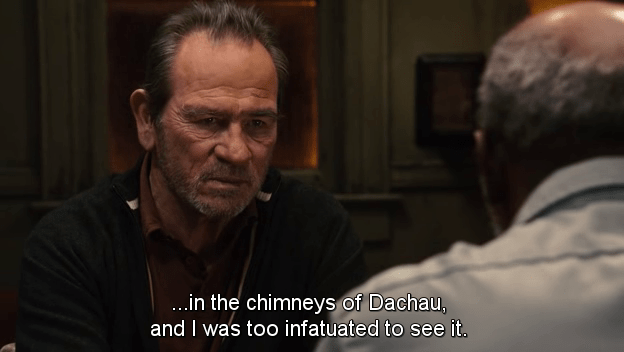
-White: I don’t regard my state of mind as some pessimistic view of the world. I regard it as the world itself. Evolution cannot avoid bringing intelligent life ultimately to an awareness of one thing and one thing above all else. And that one thing is futility.
– Black: If I’m understanding you right you saying everybody that just ain’t eat up with the dumb-ass ought to be suicidal.
– White: Yes.
– Black: You ain’t shitting me?
– White: No, I am not shitting you. If people could see the world for what it truly is see their lives for what they truly are without dreams or illusions I don’t believe they could offer the first reason why they should not elect to die as soon as possible. I don’t believe in God. Can you understand that? Look around you, man. Can’t you see? The clamor and din of those in torment has to be the sound most pleasing to his ear. And I loathe these discussions. The argument of the village atheist whose single passion is to revile endlessly that which he denies the existence of in the first place. Your fellowship is a fellowship of pain and nothing more. And if that pain were collective instead of merely reiterative the sheer weight of it would drag the world from the walls of the universe and send it crashing and burning down through whatever night it might yet be capable of engendering until it was not even ash.
Debatiéndose al modo de Hamlet, considera que una religión de la nada, de la muerte, en la que pudiésemos estar seguros de ser reducidos a polvo para siempre sería la ideal. Lo que aleja a los hombres del suicidio es el miedo a un más que incierto más allá.
-White: Show me a religion that prepares one for nothingness, for death. That’s a church I might enter. Yours prepares one only for more life, for dreams and illusions and lies. Banish the fear of death from men’s hearts they wouldn’t live a day. Who would want this nightmare but for fear of the next? The shadow of the ax hangs over every joy. Every road ends in death, every friendship, every love. Torment, loss, betrayal, pain, suffering, age, indignity, hideous lingering illness. And all of it with a single conclusion for you and everyone and every thing you have ever chosen to care for. That is the true brotherhood, the true fellowship. And everybody is a member for life.
A continuación Blanco expone una visión del mundo peculiar que recuerda bastante a tópicos de Sartre como son la náusea ante el «ser-en-sí» o la certeza de que «el infierno son los otros»:
-White: Rage is really only for the good days. The truth is there’s little of that left. The truth is that the forms I see have been slowly emptied out. They no longer have any content. They’re shapes only. A train, a wall, a world, a man, a thing dangling in senseless articulation in the howling void…no meaning to its life…its words.
-White: You tell me that my brother is my salvation? My salvation? Well, then damn him. Damn him in every shape and guise and form. Do I see myself in him? Yes, I do. And what I see sickens me. Do you understand me? Can you understand me?

Para terminar, es curioso observar la referencia de Blanco a su madre. Me ha traído a la memoria la inquina de Nietzsche por su madre y su hermana, la única objeción a su teoría del eterno retorno:
Cuando busco la antítesis más profunda de mí mismo, la incalculable vulgaridad de los instintos, encuentro siempre a mi madre y a mi hermana. Creer que yo estoy emparentado con tal canaille [gentuza] sería una blasfemia contra mi divinidad. El trato que me dan mi madre y mi hermana, hasta este momento, me inspira un horror indecible: aquí trabaja una perfecta máquina infernal, que conoce con seguridad infalible el instante en que es posible herirme cruentamente – en mis instantes supremos,… pues entonces falta toda fuerza para defenderse contra gusanos venenosos… La contigüidad fisiológica hace posible tal disharmonia praestabilita [desarmonía preestablecida] Confieso que la objeción más honda contra el «eterno retorno», que es mi pensamiento auténticamente abismal, son siempre mi madre y mi hermana. (Nietzsche, Ecce homo, Por qué soy tan sabio, 3)
La posición de Negro recuerda mucho a Kierkegaard o al misticismo del último Horkheimer. La historia de la humanidad es una sucesión de crímenes, eso que llamamos progreso sólo se consigue a costa del horror. Desde el punto de vista de la ciencia la Tierra es un pequeñísimo átomo en medio de un universo infinito cubierto por una capa de moho poblada de microbios. Pensar que el individuo está destinado a algo más requiere del impulso de lo sagrado, del misterio religioso, aunque no se tengan palabras para expresarlo. Estamos aquí de nuevo en la órbita de los postulados de la razón práctica kantiana pero, en lugar del tranquilo trance de la fe racional, sólo nos queda una especie de salto al vacío.
En un desesperado monólogo final Negro concluye:
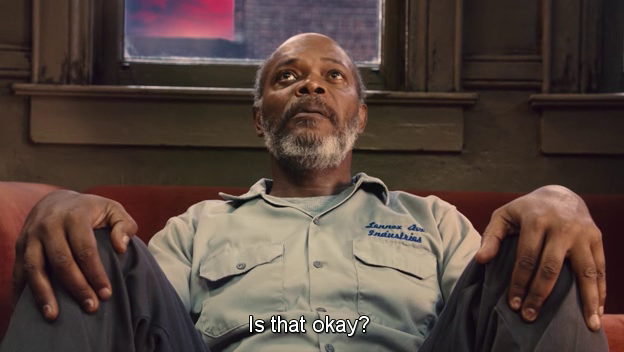
– Black: If you wanted me to help him, then how come you didn’t give me the words? You give them to him. What about me? That’s all right. That’s all right. If you don’t never speak again… you know I’ll keep your word. You know I will. You know I’m good for it. Is that okay? Is that okay?
Ficha técnica
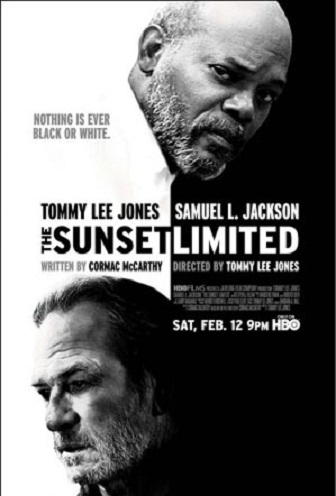
– Director: Tommy Lee Jones
– Productor: Barbara A. Hall
– Guión: Cormac McCarthy (play/screenplay)
– Intérpretes: Tommy Lee Jones; Samuel L. Jackson
– Música: Marco Beltrami
– Fotografía: Paul Elliott
– Montaje: Roberto Silvi, Larry Madaras
– País: Estados Unidos.
– Idioma: Inglés
– Fecha de estreno: 2011
– Duración: 91 minutos
Gracias a Kevin por la recomendación.
 Aula de Filosofía de Eugenio Sánchez Bravo.